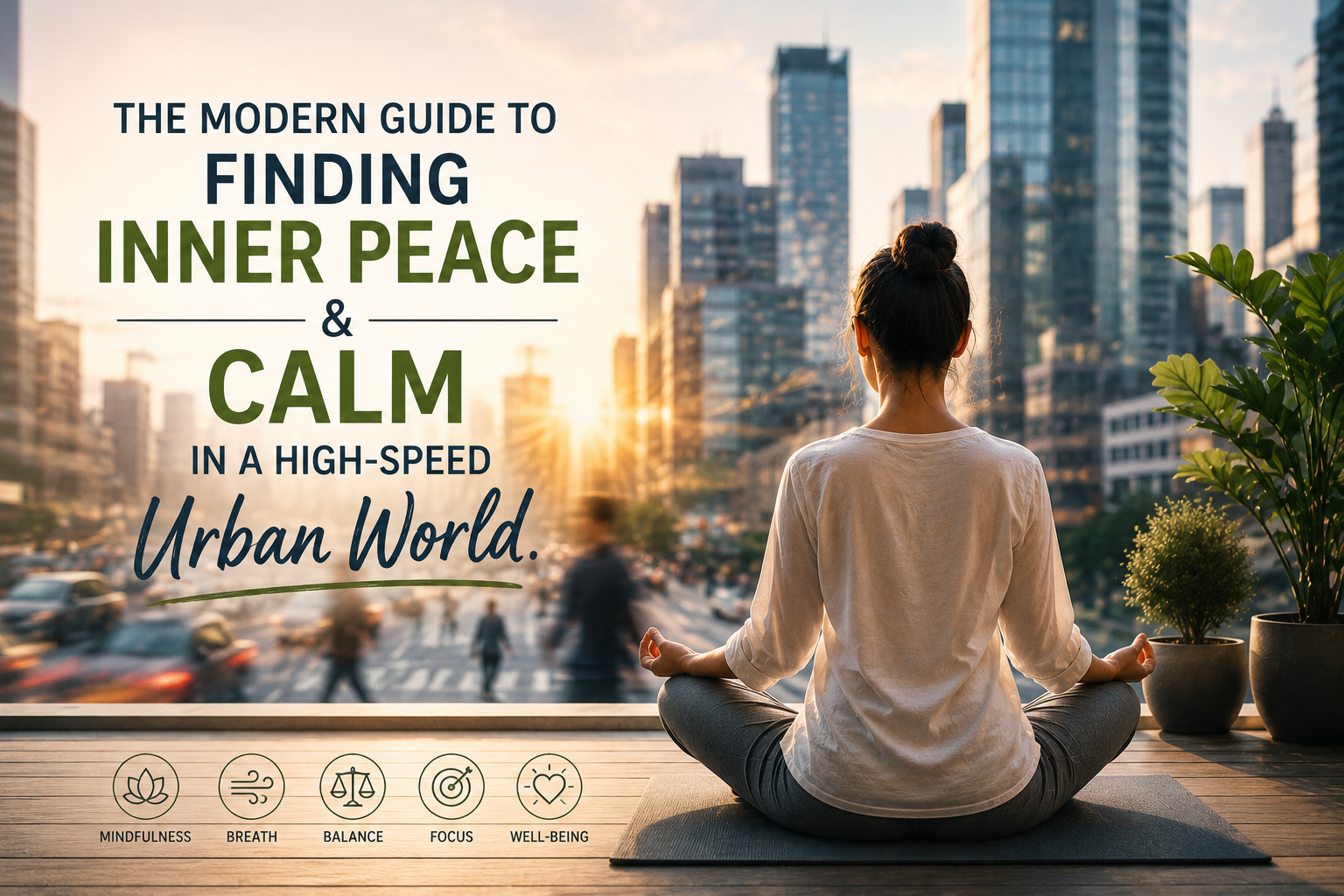
The alarm rings at 6:30 AM in a high-rise apartment in Bengaluru, Ahmedabad, or even Vadodara. Before your feet even touch the floor, your hand instinctively reaches for your smartphone. Within ninety seconds, your brain is flooded with urgent work emails on Slack, a barrage of WhatsApp notifications from family groups, and an endless stream of dopamine-inducing Instagram Reels.
By 8:30 AM, you are navigating gridlocked traffic or squeezing into a packed metro coach, your sympathetic nervous system completely activated before your workday has officially begun.
This is the reality of modern urban life. We live in a hyper-connected, high-speed ecosystem where productivity is glorified, rest is treated as a luxury, and constant noise is the baseline. Our cities have grown exponentially, bringing immense professional opportunities but also an unprecedented mental tax.
The primary question we must ask ourselves is simple: How can we maintain our mental peace and emotional stability without quitting our corporate careers or escaping to a remote Himalayan monastery?
The answer lies in mastering the art of conscious calibration, learning to cultivate a quiet mind while living in the middle of a noisy world.
To solve a problem, we must first understand its mechanics. Urban sensory overload happens when our external environment outpaces our brain’s processing capacity. Human beings did not evolve to process thousands of flashing advertisements, incessant vehicular honking, and continuous digital pings simultaneously.
When your mind is constantly bombarded, it interprets this chaotic environment as a persistent threat. This triggers a low-grade, chronic stress response, causing your body to secrete excess cortisol and adrenaline. Over time, this biological state manifests as chronic fatigue, unprovoked irritability, brain fog, and a deep-seated feeling of emotional emptiness.
[Constant Environmental Noise + Digital Overload]
│
▼
[Chronic Cortisol Secretion]
│
▼
[Anxiety, Brain Fog, and Physical Fatigue]
Many urban professionals try to numb this exhaustion with short-term distractions, weekend partying, mindless online shopping, or binge-watching streaming platforms late into the night. However, these activities do not rest the brain; they merely provide a different form of stimulation. True restoration requires intentional stillness.
When people think of meditation, they often imagine sitting cross-legged for an hour in absolute silence. For a busy corporate professional or a working parent, finding a continuous, uninterrupted hour can feel nearly impossible, leading them to abandon the practice entirely.
The solution is micro-meditation, short, highly structured blocks of mindfulness designed to reset your nervous system throughout the workday.
Instead of waiting for the perfect environment, you can practice micro-meditation right at your office desk or during your daily commute.
By scattering these brief, intentional pauses throughout your day, you prevent stress from accumulating into a late-evening emotional breakdown.
Looking for a Deeper Transformation?
If micro-meditations are giving you a taste of peace, imagine what a fully aligned mind can do for your career and relationships. Join our upcoming Life Bliss Meditation Program to learn structured, deep-cleansing techniques that remove deep-seated subconscious baggage. Then get in touch with our team and book your workshop to find your inner peace.
In our high-speed world, you cannot always control what happens during the middle of the day. A client might throw a tantrum, a meeting might run over, or a project deadline might suddenly change. However, you have complete control over how your day begins and how it ends. We call these your daily spiritual bookends.
The first hour of your morning dictates the energetic trajectory of your entire day. If you check your phone immediately upon waking, you surrender your mental clarity to the agendas of other people.
Instead, build a protective morning buffer. Spend the first forty-five minutes of your day entirely offline. Drink a glass of warm water, stretch your body to release physical tension, and set a singular, conscious intention for the day ahead. Your intention could be as simple as: “Today, I will respond to challenges with patience rather than reacting with anger.”
Just as you need a deliberate routine to wake up, your brain needs a clear signal to wind down. Implement a strict “digital sunset” by turning off all work laptops and putting away smartphones at least sixty minutes before you intend to sleep.
Replace screen time with reading a physical book, journaling your thoughts to declutter your mind, or listening to calming ambient sounds. This simple boundary allows your brain to produce melatonin naturally, ensuring deep, restorative sleep that repairs your body and mind.
A significant portion of urban stress does not stem from physical survival needs; it comes from psychological pressure. We are constantly exposed to peer achievements on professional platforms like LinkedIn and social highlights on Instagram, which silently breeds a deep-seated scarcity mindset. We constantly feel that we are not doing enough, earning enough, or achieving enough.
This perpetual race keeps our minds in a state of survival mode. To find genuine calm, you must consciously shift toward an abundance consciousness.
| Dimension | Scarcity Mindset | Abundance Consciousness |
| Primary Driver | Fear of missing out or falling behind | Gratitude for current resources and capabilities |
| View of Competition | Seeing others’ success as a threat to yours | Understanding that success is non-zero-sum |
| Reaction to Errors | Intense self-criticism and prolonged anxiety | Treating failures as essential data for course correction |
| Work Approach | Desperately forcing outcomes through burnout | Working with focused intent while detaching from immediate results |
Abundance consciousness is not about passive complacency; it is about operating from a baseline of emotional fulfillment rather than chronic insufficiency. When you work out of inspiration rather than desperation, your productivity increases, your creativity flourishes, and your stress levels naturally drop.
We live in an era where our attention is a highly monetized commodity. Tech applications are explicitly engineered to keep us hooked, scrolling, and emotionally reactive. If you do not consciously manage your digital intake, your mind will remain perpetually fragmented.
Radical digital minimalism does not mean deleting your social media accounts and moving off the grid. It means establishing firm, unyielding boundaries with your technology.
Modern city living has physically disconnected us from the natural world. We walk on concrete, live in steel structures, and breathe conditioned air. This physical isolation from nature directly impacts our psychological well-being.
Grounding, or spending intentional time in natural spaces, is a scientifically backed method to reduce systemic inflammation and lower anxiety levels. Even within a bustling metropolis, you can find small pockets of nature if you look for them.
[Disconnect: Concrete Cities & Screen Time] ──► Increases Stress & Anxiety
[Reconnect: Walking Barefoot on Grass & Trees] ──► Decreases Cortisol & Grounds Mind
Make it a weekly ritual to visit a local park early in the morning. Take off your shoes and walk barefoot on the dew-covered grass. Spend a few minutes sitting quietly under a tree, observing the natural movement of birds and leaves.
This simple act reminds your subconscious mind that life operates on a grander, more patient timeline than your corporate calendar. It puts your daily worries into perspective, helping you realize that your worth is not defined solely by your professional output.
Finding calm in a high-speed urban world is not a one-time achievement; it is a conscious, daily practice. It requires you to say “no” to unnecessary external demands so you can say “yes” to your own internal well-being. You do not need to change your geography to find peace; you simply need to change your relationship with your environment.
By implementing micro-meditations, protecting your morning and evening hours, shifting your mindset, managing your digital boundaries, and spending time in nature, you build an unshakeable inner sanctuary. The noise of the city will continue, but it will no longer have the power to disturb your inner bliss.
Take the First Step Toward Your Inner Sanctuary
Ready to stop surviving the urban hustle and start thriving in absolute clarity? Your path to emotional freedom and lifelong mental peace starts with a single step. Book a personalized, one-on-one Holistic Wellness Consultation with our expert guides at The Life Bliss. Let us help you design a customized mindfulness routine tailored directly to your demanding lifestyle.